Rethinking KYC: Faster, Trust-Driven Verification Flow
Rethinking KYC: Faster, Trust-Driven Verification Flow
Rethinking KYC: Faster, Trust-Driven Verification Flow
A human-centered KYC experience that minimizes user effort while improving verification success rates.
A human-centered KYC experience that minimizes user effort while improving verification success rates.
A human-centered KYC experience that minimizes user effort while improving verification success rates.
Introduction
Introduction
Introduction
Identity verification is a critical step in fintech onboarding, but it’s often frustrating and unclear. Poor KYC experiences lead to high drop-off rates, costing companies users and revenue.
Identity verification is a critical step in fintech onboarding, but it’s often frustrating and unclear. Poor KYC experiences lead to high drop-off rates, costing companies users and revenue.
Identity verification is a critical step in fintech onboarding, but it’s often frustrating and unclear. Poor KYC experiences lead to high drop-off rates, costing companies users and revenue.
THE PROBLEM
THE PROBLEM
THE PROBLEM
Problem Statement
Problem Statement
Problem Statement
Users struggle to complete identity verification due to unclear guidance, repeated failures, and lack of feedback throughout the process.
Users struggle to complete identity verification due to unclear guidance, repeated failures, and lack of feedback throughout the process.
Users struggle to complete identity verification due to unclear guidance, repeated failures, and lack of feedback throughout the process.
Key Friction Points
Key Friction Points
Key Friction Points
Document scans fail without clear guidance
Users are asked to re-enter information they already provided
No visibility into verification progress
Cold, legal-heavy language reduces trust
Failure states don’t explain what went wrong
Document scans fail without clear guidance
Users are asked to re-enter information they already provided
No visibility into verification progress
Cold, legal-heavy language reduces trust
Failure states don’t explain what went wrong
Document scans fail without clear guidance
Users are asked to re-enter information they already provided
No visibility into verification progress
Cold, legal-heavy language reduces trust
Failure states don’t explain what went wrong
Why This Matters
Why This Matters
Why This Matters
High drop-off during KYC onboarding directly impacts conversion rates. Improving this flow not only enhances user experience but also increases successful account creation and reduces support requests.
High drop-off during KYC onboarding directly impacts conversion rates. Improving this flow not only enhances user experience but also increases successful account creation and reduces support requests.
High drop-off during KYC onboarding directly impacts conversion rates. Improving this flow not only enhances user experience but also increases successful account creation and reduces support requests.
Design Approach
Design Approach
Design Approach
This project focuses on reducing friction and increasing transparency by guiding users through verification with real-time feedback, clear recovery paths, and trust-building communication.
This project focuses on reducing friction and increasing transparency by guiding users through verification with real-time feedback, clear recovery paths, and trust-building communication.
This project focuses on reducing friction and increasing transparency by guiding users through verification with real-time feedback, clear recovery paths, and trust-building communication.
Core Solution
Core Solution
Core Solution
Confidence-Based Document Capture
Confidence-Based Document Capture
Confidence-Based Document Capture
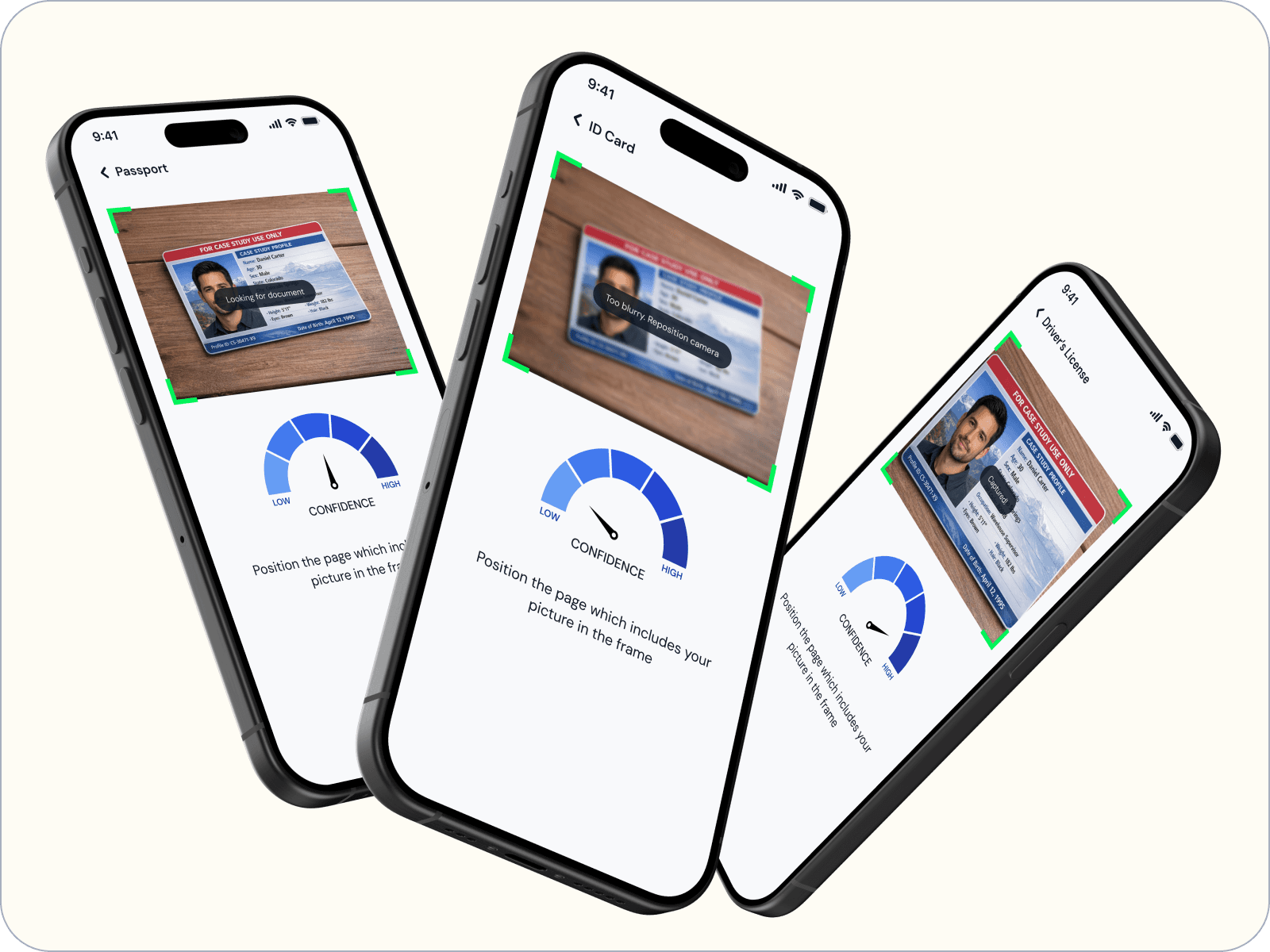
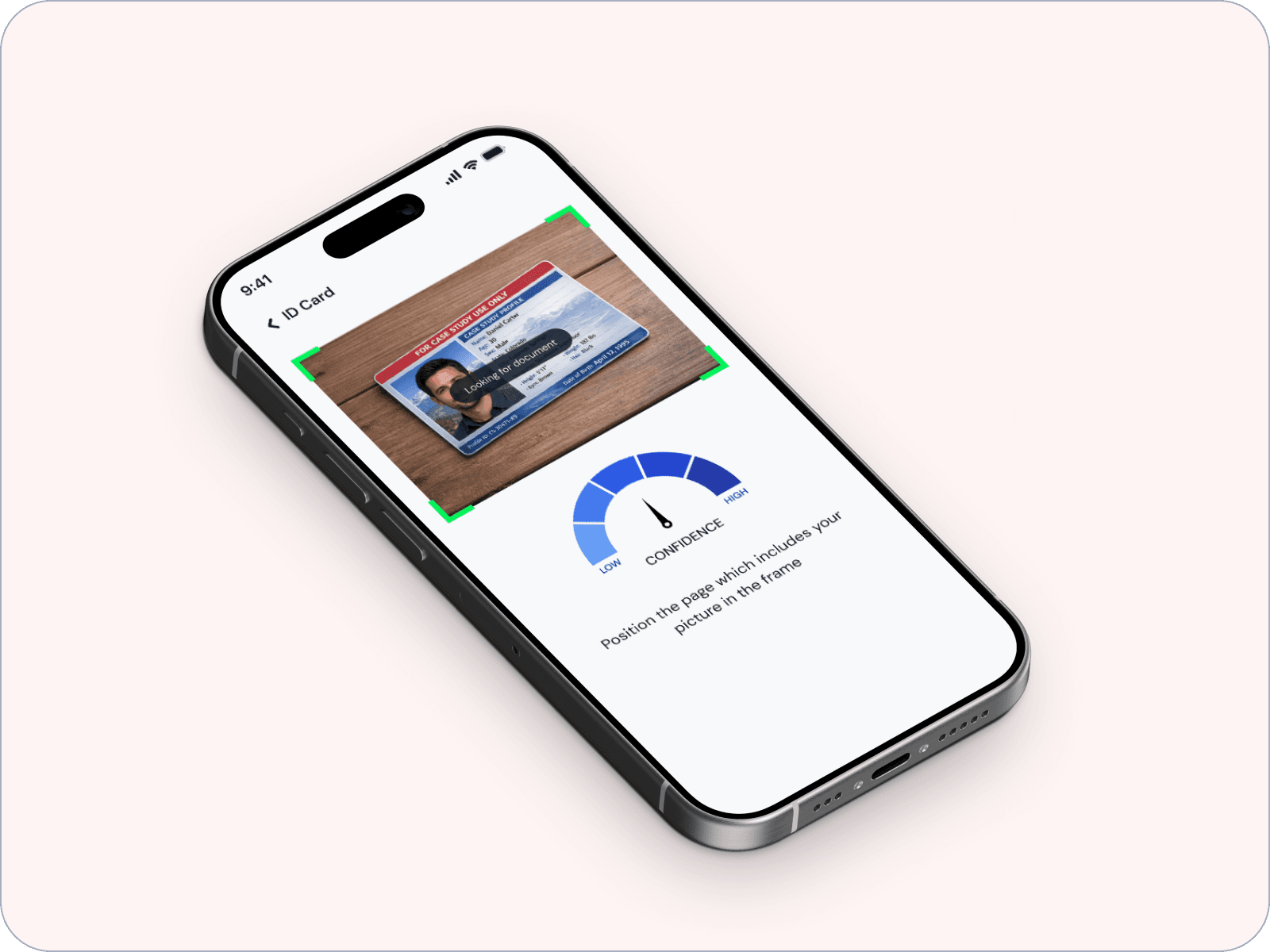
Instead of forcing users to guess when their document is properly captured, the system provides real-time feedback through a confidence indicator. This helps users understand scan quality and reduces repeated failures.
Instead of forcing users to guess when their document is properly captured, the system provides real-time feedback through a confidence indicator. This helps users understand scan quality and reduces repeated failures.
Instead of forcing users to guess when their document is properly captured, the system provides real-time feedback through a confidence indicator. This helps users understand scan quality and reduces repeated failures.
Smart Failure Recovery
Smart Failure Recovery
Smart Failure Recovery
When verification fails, users receive specific, actionable feedback instead of generic error messages. This makes it easier to correct issues and continue the process without frustration.
When verification fails, users receive specific, actionable feedback instead of generic error messages. This makes it easier to correct issues and continue the process without frustration.
When verification fails, users receive specific, actionable feedback instead of generic error messages. This makes it easier to correct issues and continue the process without frustration.

Transparent Verification Progress
Transparent Verification Progress
Transparent Verification Progress
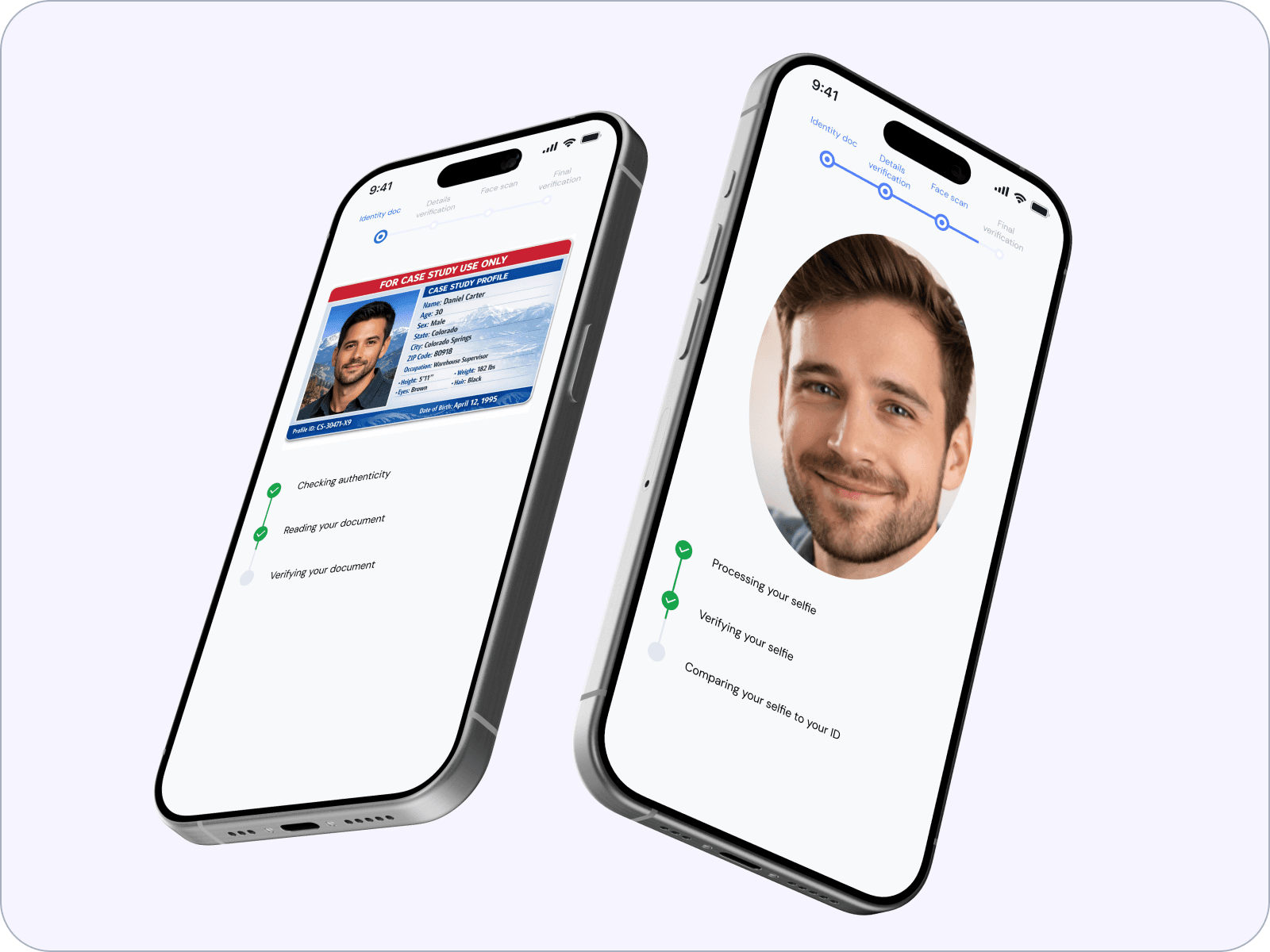
A step-by-step progress system shows users exactly what is happening during verification, reducing uncertainty and improving trust.
A step-by-step progress system shows users exactly what is happening during verification, reducing uncertainty and improving trust.
A step-by-step progress system shows users exactly what is happening during verification, reducing uncertainty and improving trust.
Solution Walkthrough
Solution Walkthrough
Solution Walkthrough
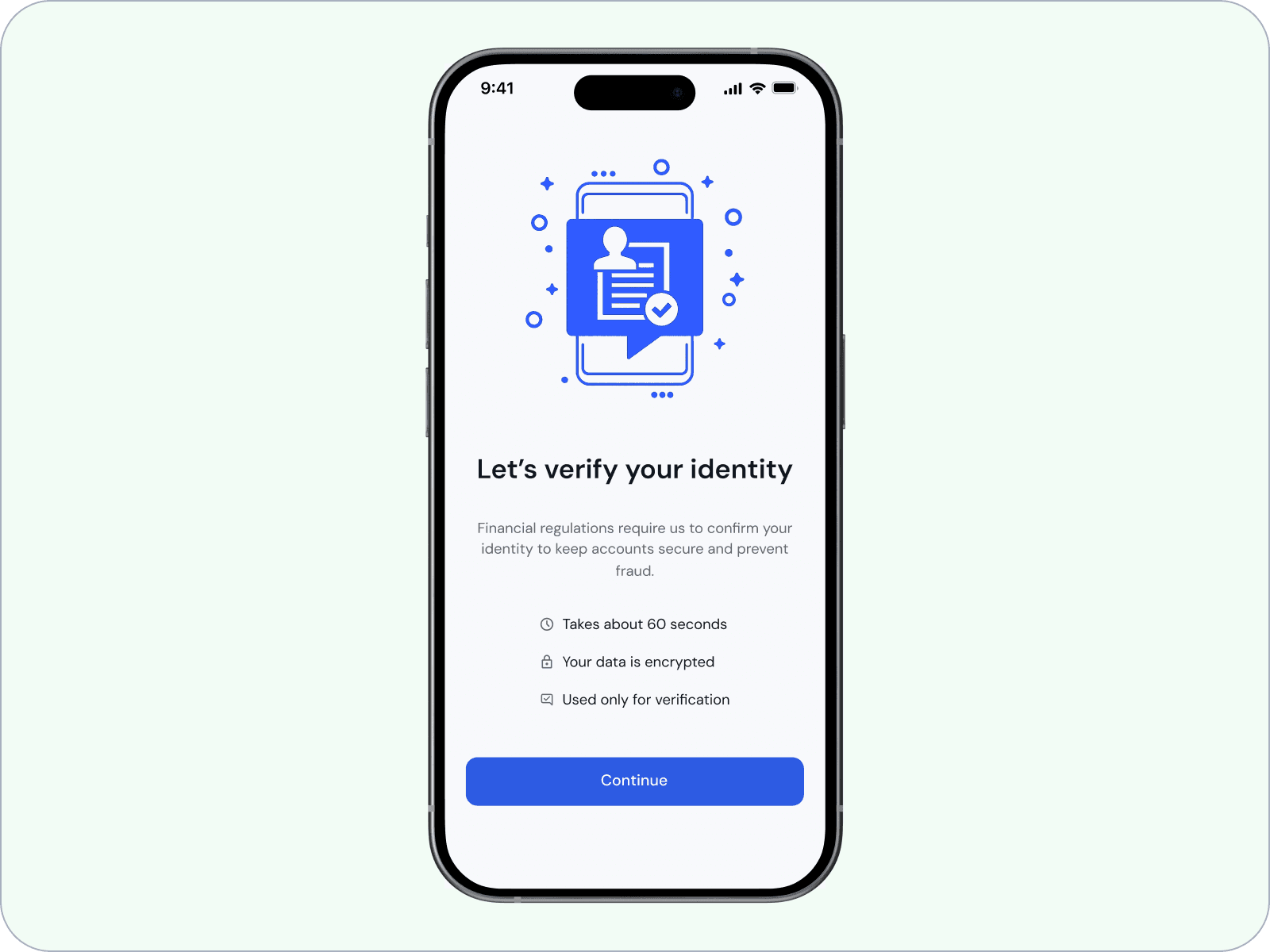
Verification Introduction
Verification Introduction
Verification Introduction
Set expectations early and explain why identity verification is required.
Set expectations early and explain why identity verification is required.
Set expectations early and explain why identity verification is required.
Guided ID Capture
Guided ID Capture
Guided ID Capture
Camera-first experience with real-time feedback and confidence indicator.
Camera-first experience with real-time feedback and confidence indicator.
Camera-first experience with real-time feedback and confidence indicator.
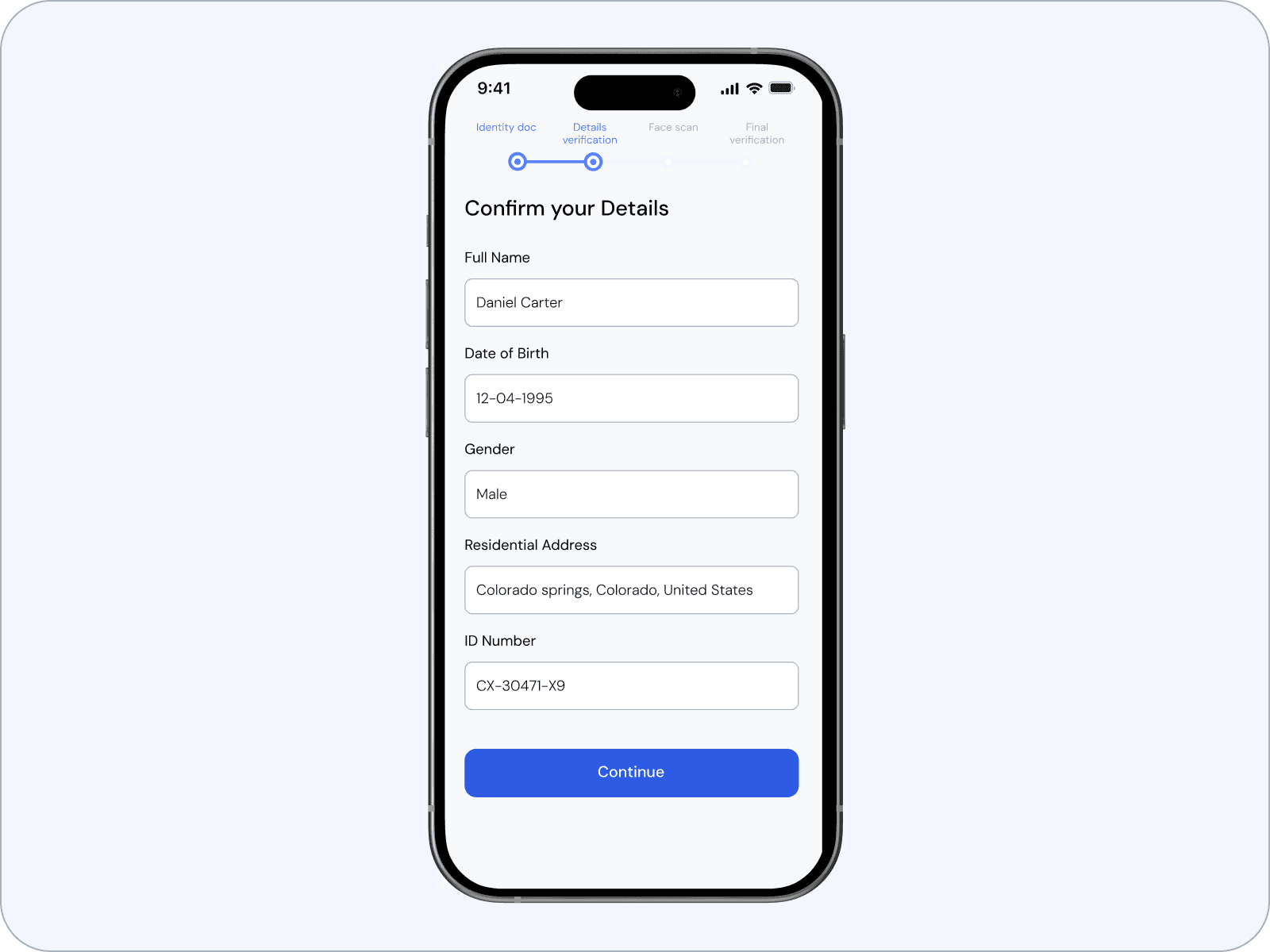
Smart Data Extraction
Smart Data Extraction
Smart Data Extraction
Automatically extract user information from the ID to reduce manual input.
Automatically extract user information from the ID to reduce manual input.
Automatically extract user information from the ID to reduce manual input.
Face Verification
Face Verification
Face Verification
Simple, guided selfie capture with alignment assistance.
Simple, guided selfie capture with alignment assistance.
Simple, guided selfie capture with alignment assistance.

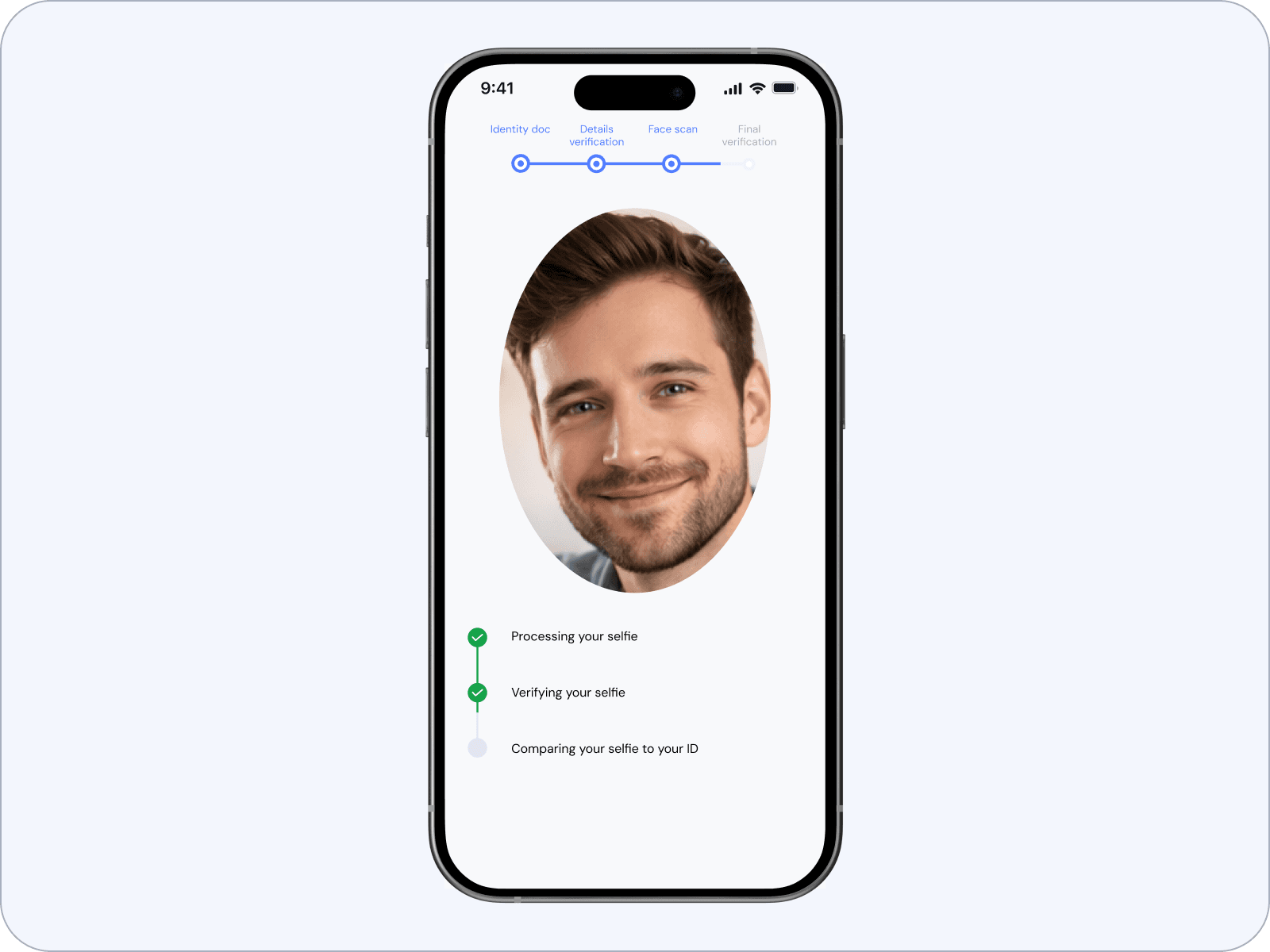
Verification in Progress
Verification in Progress
Verification in Progress
Clear system status updates to reduce uncertainty.
Clear system status updates to reduce uncertainty.
Clear system status updates to reduce uncertainty.
Failure Recovery
Failure Recovery
Failure Recovery
Helpful error states that guide users to fix issues quickly.
Helpful error states that guide users to fix issues quickly.
Helpful error states that guide users to fix issues quickly.

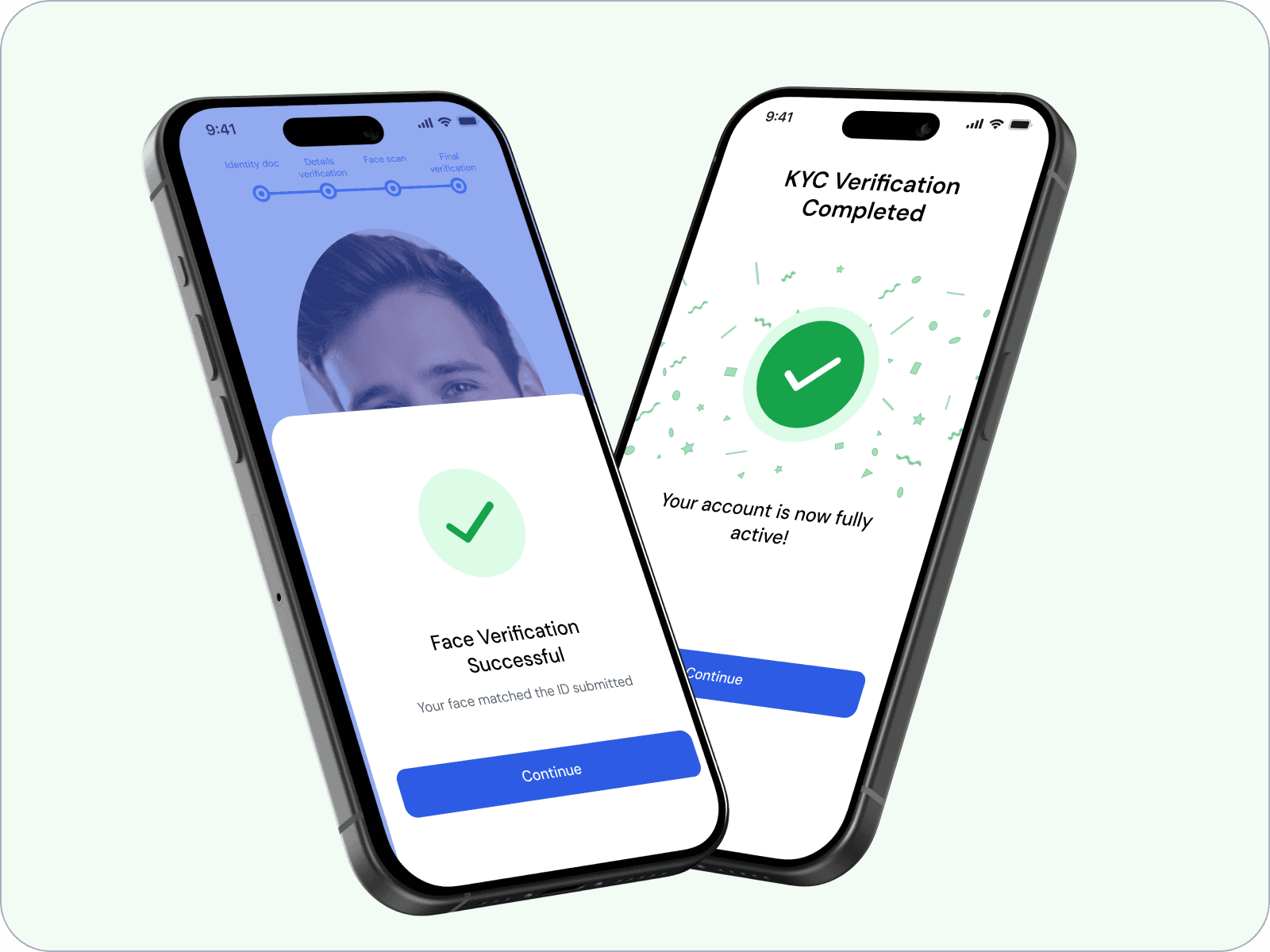
Success Confirmation
Success Confirmation
Success Confirmation
Clear confirmation and next step after successful verification.
Clear confirmation and next step after successful verification.
Clear confirmation and next step after successful verification.
Micro-interactions
Micro-interactions
Micro-interactions
Motion is used to enhance clarity and feedback throughout the experience, including scan detection, progress transitions, and success states.
Motion is used to enhance clarity and feedback throughout the experience, including scan detection, progress transitions, and success states.
Motion is used to enhance clarity and feedback throughout the experience, including scan detection, progress transitions, and success states.
Expected Outcome
Expected Outcome
Expected Outcome
The redesigned flow aims to improve onboarding completion by reducing friction, increasing clarity, and building user trust during identity verification.
The redesigned flow aims to improve onboarding completion by reducing friction, increasing clarity, and building user trust during identity verification.
Reduced verification drop-off
Faster onboarding completion
Improved user confidence
Fewer support requests
Reduced verification drop-off
Faster onboarding completion
Improved user confidence
Fewer support requests
Reflections
Reflections
Reflections
Designing this experience highlighted how small usability issues in high-friction flows can significantly impact user behavior. By focusing on feedback, clarity, and recovery, the verification process becomes less of a barrier and more of a guided experience.
Designing this experience highlighted how small usability issues in high-friction flows can significantly impact user behavior. By focusing on feedback, clarity, and recovery, the verification process becomes less of a barrier and more of a guided experience.